Why Was My Skull Theory Wrong? 7 Common Reasons Explained
Why Was My Skull Theory Wrong? 7 Common Reasons Explained
You got a skull theory prediction — maybe from an online forum, a social media post, or even a paid service — and it turned out to be wrong. That baby you thought was a boy arrived as a girl, or vice versa.
It's disappointing, frustrating, and confusing. You trusted the method, you trusted the prediction, and now you're wondering: why was my skull theory wrong?
The honest answer is: skull theory is wrong 25-35% of the time. It's the least accurate of the three major ultrasound gender prediction methods. But understanding why it went wrong can help you make better decisions next time and avoid the same disappointment.
In this guide, we'll walk through the 7 most common reasons skull theory predictions miss, what you can do if you've experienced this, and how to get more reliable predictions going forward.
What Is Skull Theory?
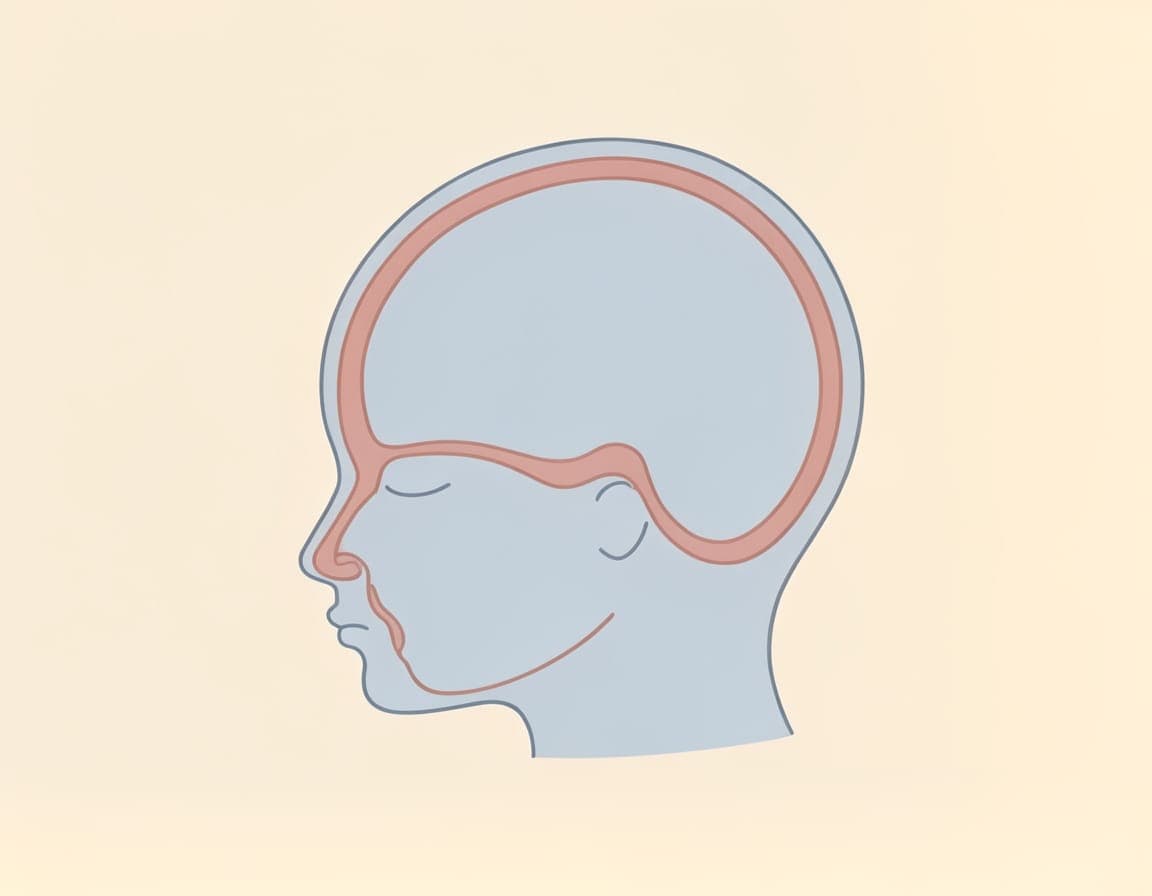
Skull theory analyzes the shape and features of a baby's skull on an ultrasound image to predict gender:
- Boy skull characteristics: Squarer jaw, more prominent brow ridge, larger skull overall, more angular features
- Girl skull characteristics: Rounder jaw, softer brow ridge, rounder skull shape, more delicate features
Unlike Ramzi theory (which looks at placenta position) or Nub theory (which measures the genital tubercle angle), skull theory is entirely visual — it depends on someone looking at an ultrasound and deciding whether the skull "looks masculine" or "looks feminine."
That subjectivity is why skull theory is the least reliable method. Two experienced analysts can look at the same image and reach different conclusions.
Reason 1: Subjective Interpretation
This is the single biggest reason skull theory predictions are wrong.
Skull theory is not like measuring an angle (nub theory) or checking left/right position (Ramzi theory). It's a visual assessment where one person's "round" is another person's "slightly angular."
Think of it like trying to describe someone's face shape. Is it oval? Round? Square? There's no clear boundary — it's a spectrum, and different people will classify the same face differently.
When an analyst looks at your ultrasound:
- They might over-emphasize one feature (like the jawline) while ignoring others (like the brow ridge)
- Their personal experience and training might bias them toward seeing certain patterns
- They might rely on "gut feeling" rather than systematic evaluation
This subjectivity means skull theory has significantly more human error built in than other methods. For more on why skull theory is less reliable, see our guide on can skull theory be wrong.
Reason 2: Your Ultrasound Was Too Early
Skull theory is typically attempted at 12+ weeks, but that doesn't mean it's accurate at 12 weeks.
Fetal skull features are still developing in the first trimester. At 12 weeks, the differences between male and female skulls are:
- Extremely subtle
- Often obscured by normal developmental variation
- Hard to distinguish from natural individual differences
The longer you wait, the more pronounced cranial features become. A skull that looks ambiguous at 12 weeks might clearly look masculine or feminine at 16 weeks.
If your skull theory prediction was based on a scan before 14-15 weeks, timing alone could explain the wrong prediction. The skull features simply weren't developed enough for a reliable assessment.
Reason 3: Wrong Angle or Partial View
Skull theory works best on a clear profile view — a side shot showing the entire face from forehead to chin.
If your ultrasound wasn't a perfect profile view, the prediction accuracy drops dramatically:
- Tilted angle: The skull appears distorted — a round jaw looks more square, a soft brow ridge looks more prominent
- Partial view: Missing features make it impossible to see the full picture
- Facing forward: The 3D structure of the skull is harder to assess head-on
- Crowded view: If other body parts or the uterus wall are blocking part of the skull
What happens with bad angles: An analyst fills in the gaps with assumptions. They might "imagine" features they can't clearly see, leading to predictions based on incomplete data.
Reason 4: Poor Image Quality
Skull theory depends entirely on what the analyst can see. If your ultrasound image quality was poor, the prediction is essentially a guess.
Common image quality issues:
- Low resolution: Blur makes cranial features indistinct
- Poor contrast: Can't distinguish between skull edges and surrounding tissue
- Overexposed or underexposed: Brightness hides subtle features
- Motion blur: Baby moved during the scan
- Photo of a screen: A digital file is far superior to a picture taken with your phone
Low-quality images lead to guesswork, not analysis. An analyst might see something that looks like a "prominent brow ridge" when it's actually just a shadow or compression artifact.
This is why professional analysis services will often reject or refund low-quality images rather than give a prediction they can't stand behind.
Reason 5: Fetal Position Within the Uterus
The baby's position relative to the ultrasound probe affects how the skull appears:
- Anterior position: Baby faces the front of the uterus — easier to get clear images
- Posterior position: Baby faces the back — skull features are harder to see clearly
- Transverse position: Baby lies sideways — profile view may be at an awkward angle
- Oblique position: Baby is tilted — skull appears distorted
If your baby was in a suboptimal position, the skull features the analyst tried to evaluate may have been:
- Partially hidden
- Distorted by the angle
- Unclear due to depth within the uterus
Position is outside anyone's control — but it directly impacts prediction accuracy.
Reason 6: Genetic and Ethnic Variation
Skull shape varies naturally based on genetics and ethnicity. The "typical boy skull" or "typical girl skull" descriptions are broad generalizations that don't account for:
- Family cranial shape traits (both parents have strong jawlines, for example)
- Ethnic variations in skull morphology
- Individual genetic expression
If your baby has strong genetic jawline traits (from either parent), their skull might display features that skull theory would classify as "masculine" — even if they're a girl.
This is why skull theory is inherently unreliable for certain populations or family lines. It doesn't account for the full range of natural human variation.
Reason 7: Natural Statistical Variance
Even with perfect timing, perfect image quality, perfect angle, and perfect fetal position — skull theory is still wrong 25-35% of the time.
This is the baseline error rate for the method.
Why? Because skull features overlap significantly between genders. Many boy skulls look somewhat feminine, and many girl skulls look somewhat masculine. There's no clean boundary where "all skulls on this side are boys and all skulls on that side are girls."
Some predictions are wrong simply because:
- The baby falls into the overlapping middle of the distribution
- Random variation pushes their skull features in the atypical direction
- No method is perfect — even medical anatomy scans have a tiny (less than 1%) error rate
This isn't anyone's fault — it's just the inherent limitation of the method.
What to Do If Your Skull Theory Prediction Was Wrong
First, know this: you're not alone. Given skull theory's 25-35% error rate, being wrong is statistically common.
Immediate Steps
- Don't blame yourself. You made a reasonable decision based on available information.
- Don't blame the analyst (unless they promised 100% accuracy — that's dishonest). Skull theory has known limitations.
- Review what happened. Was the image quality good? Was it early in pregnancy? Was the angle clear?
- Check other methods. Did Ramzi and Nub theory predictions agree or disagree with the skull prediction?
For Future Pregnancies
If you want more reliable predictions next time:
- Prioritize nub theory over skull theory — it's 80-90% accurate at 13+ weeks
- Use a multi-method analysis — combining Ramzi, Nub, and Skull theory strengthens predictions
- Choose a professional service with honest confidence reporting — not online forums
- Get the best ultrasound images possible — ask your tech for a clear profile shot at 13-15 weeks
- Remember it's for fun, not certainty — early prediction is exciting, but always confirm medically
How to Get More Reliable Predictions
If you're disappointed by skull theory, there are better options:
1. Multi-Method Professional Analysis
Our comprehensive analysis uses all three methods — Ramzi, Nub, and Skull theory — together. When methods agree, confidence is high. When they disagree, we report the uncertainty honestly.
We also:
- Assess image quality before analyzing
- Provide confidence scores with each prediction
- Refund if your image isn't suitable for analysis
2. Focus on Timing
For the most accurate early prediction:
- Nub theory: Best at 12 weeks 3 days to 13 weeks (sweet spot for visibility + accuracy)
- Ramzi theory: Best at 6-12 weeks (placenta position is clearest early)
- Skull theory: Better at 16+ weeks (cranial features more pronounced)
If you're planning an ultrasound, schedule it with timing in mind.
3. Get Multiple Images
Different angles give analysts more to work with:
- Profile view (side shot)
- Slightly different angles
- Zoomed-in and zoomed-out views
More data = more accurate analysis.
The Bottom Line
If your skull theory prediction was wrong, it's most likely due to one (or more) of these 7 reasons:
- Subjective interpretation — skull theory is highly visual and subjective
- Too early — skull features weren't developed enough
- Wrong angle — distorted or partial views affect assessment
- Poor image quality — blur, low resolution, or bad contrast
- Fetal position — baby was in a difficult position to see clearly
- Genetic variation — your baby's natural skull shape falls outside generalizations
- Natural variance — skull theory's 25-35% baseline error rate
Skull theory is the least accurate method for a reason. It's fun, it's intriguing, but it should never be your only source of information — and it should never be used for decisions that truly matter.
Ready for a more reliable prediction? Our multi-method analysis gives you the strongest possible answer before your anatomy scan. Explore our packages starting at $9.99.
For more pregnancy resources, try our free due date calculator or gender quiz.
Frequently Asked Questions
How often is skull theory wrong?
Skull theory is wrong approximately 25-35% of the time, making it the least accurate of the three major ultrasound gender prediction methods. For comparison, Nub theory is wrong about 10-20% of the time and Ramzi theory about 15-25% of the time.
Is skull theory more accurate for boys or girls?
No strong evidence suggests skull theory is more accurate for one gender. Both boy and girl predictions carry similar error rates. Accuracy depends far more on image quality, fetal position, and gestational age than on the baby's actual gender.
Can skull theory be right even when it looks wrong?
Sometimes an analyst makes a prediction that seems counterintuitive based on what you see on the ultrasound. Experienced professionals look at multiple cranial features together rather than focusing on a single trait like jaw shape. The overall pattern matters more than any individual feature.
Should I rely on skull theory alone?
We strongly recommend against relying on skull theory alone. Its accuracy simply isn't high enough. For the best results, combine it with Ramzi theory and Nub theory, and always confirm with your healthcare provider.
What should I do if skull theory was wrong?
If your skull theory prediction was incorrect: (1) Remember that skull theory is the least accurate method — 25-35% error rate is expected, (2) Consider whether image quality was optimal, (3) Check if other theories (Ramzi/Nub) agreed or disagreed, (4) Don't rely on skull theory alone for important decisions. Always confirm gender medically through your anatomy scan or NIPT.
Why is skull theory less accurate than nub theory?
Skull theory is less accurate than nub theory because: (1) It's more subjective — depends on visual interpretation rather than measurable angles, (2) It has less scientific backing — minimal peer-reviewed research, (3) Fetal skull features are naturally more variable than genital tubercle development, (4) Image quality affects skull visibility more than nub visibility. Prioritize nub theory when both are available.
Does skull theory work better later in pregnancy?
Generally, yes. At 16+ weeks, cranial features are more developed and pronounced, which can make skull theory analysis more reliable. However, even at later gestational ages, the accuracy still doesn't match Nub theory or medical confirmation methods.
References
- Walker, P.L. (2008). "Sexing skulls using discriminant function analysis." American Journal of Physical Anthropology, 136(1), 39-50.
- Scheuer, L. & Black, S. (2000). "Developmental Juvenile Osteology." Academic Press.
- American College of Obstetricians and Gynecologists (ACOG). "Ultrasound Examinations." acog.org, 2024.
Medical Disclaimer: Skull theory and other ultrasound gender prediction methods are for informational and entertainment purposes only. They are not scientifically validated diagnostic tools. Always consult your healthcare provider for confirmed medical information about your baby's gender.
Get Your Professional Prediction
Let our experts analyze your ultrasound using the methods discussed in this article.
View Our Services